

The Science Behind: Why Nature Helps Your Brain Rest
Have you ever noticed how a quick walk outside can help clear your head when you're stuck on a problem? Or how looking at a plant on your desk seems to ease that mid-afternoon tension? There's actual science behind why nature feels so restorative, and understanding it can transform how you design your work-from-home space.
Attention Restoration Theory: Giving Your Brain a Break
Our brains are working hard all day, every day. When we're focused on work tasks, answering emails, or solving problems, we're using what researchers call "directed attention." This is the mental effort we use to concentrate, filter out distractions, and stay on task. The challenge? Directed attention is a limited resource. It gets depleted, which is why you feel mentally exhausted after hours of focused work, even if you haven't moved from your desk.
This is where Attention Restoration Theory (ART) comes in. Developed by environmental psychologists Rachel and Stephen Kaplan, ART explains that natural environments help restore our depleted attention. When we look at nature—whether it's a view of trees through a window, a houseplant on our desk, or even an image of a natural landscape—our brain gets to rest. Nature captures our attention effortlessly (what researchers call "soft fascination"), allowing our directed attention to recover.
Think of it like this: your brain's focus muscle needs rest just like your body does after exercise. Nature provides that rest.
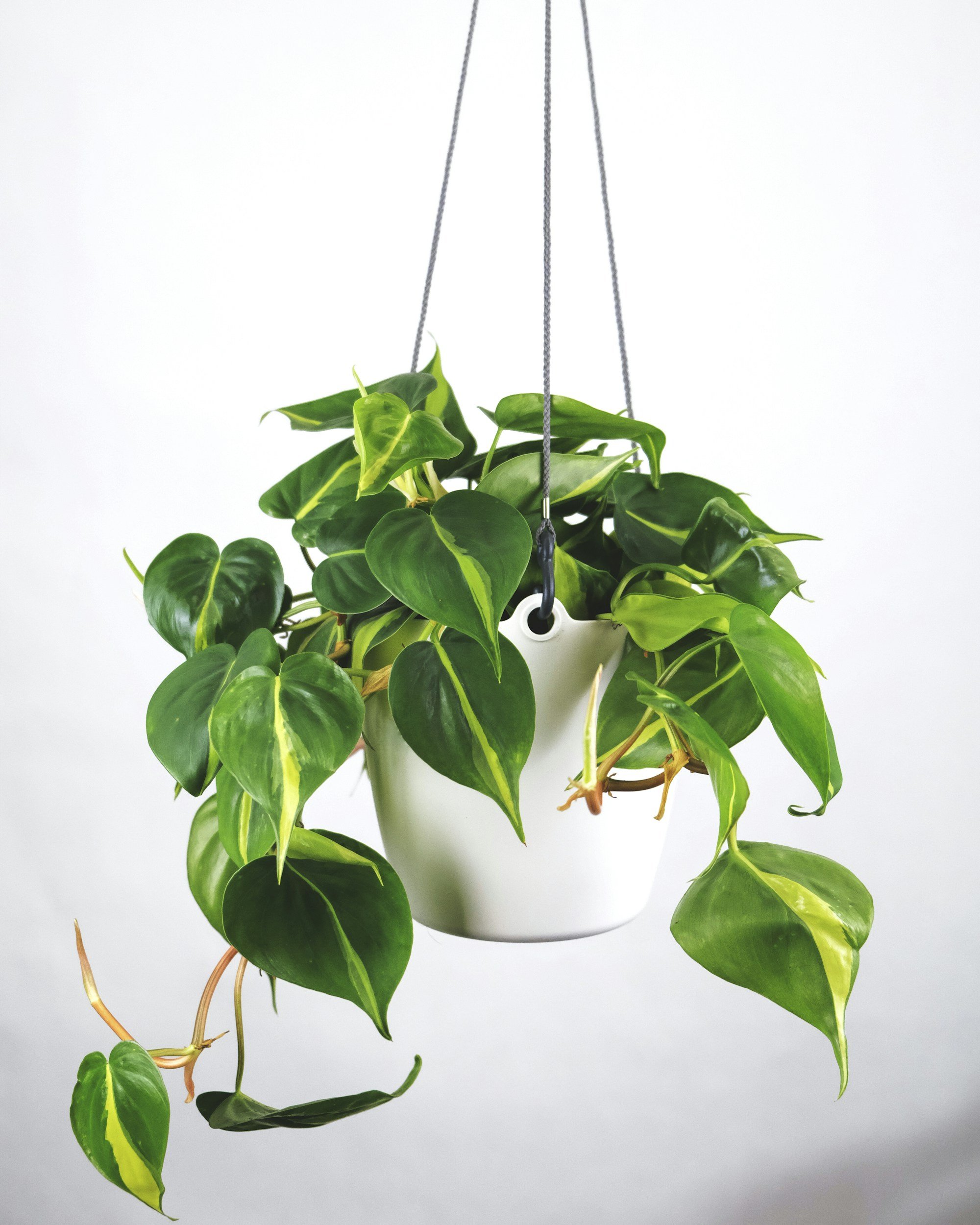
No room on your desk for a plant? Consider hanging a plant to create different levels of interest for your eyes to turn to!
For neurodivergent brains, this restoration effect can be particularly valuable. Many neurodivergent individuals experience heightened sensory processing or find it challenging to filter competing stimuli. The gentle, predictable patterns in nature—the swaying of leaves, the growth of plants—offer a calming focus point without overwhelming the senses.
Stress Reduction Theory: Nature as Your Nervous System's Friend
While ART focuses on mental restoration, Stress Reduction Theory (SRT), developed by Roger Ulrich, looks at nature's impact on our emotional and physiological wellbeing. The research here is compelling: viewing nature can lower heart rate, reduce blood pressure, and decrease levels of stress hormones like cortisol.
Why does this happen? Ulrich's theory suggests that humans have an evolutionary connection to natural environments. We're biologically predisposed to respond positively to nature because, throughout human history, natural settings represented safety, resources, and survival. When we encounter nature, our nervous system recognizes it as a signal that we're safe, which triggers a relaxation response.
In your workspace, this means that incorporating natural elements doesn't just look nice—it actively helps your body and mind shift out of stress mode. This can be especially helpful during challenging work moments or when anxiety levels rise.
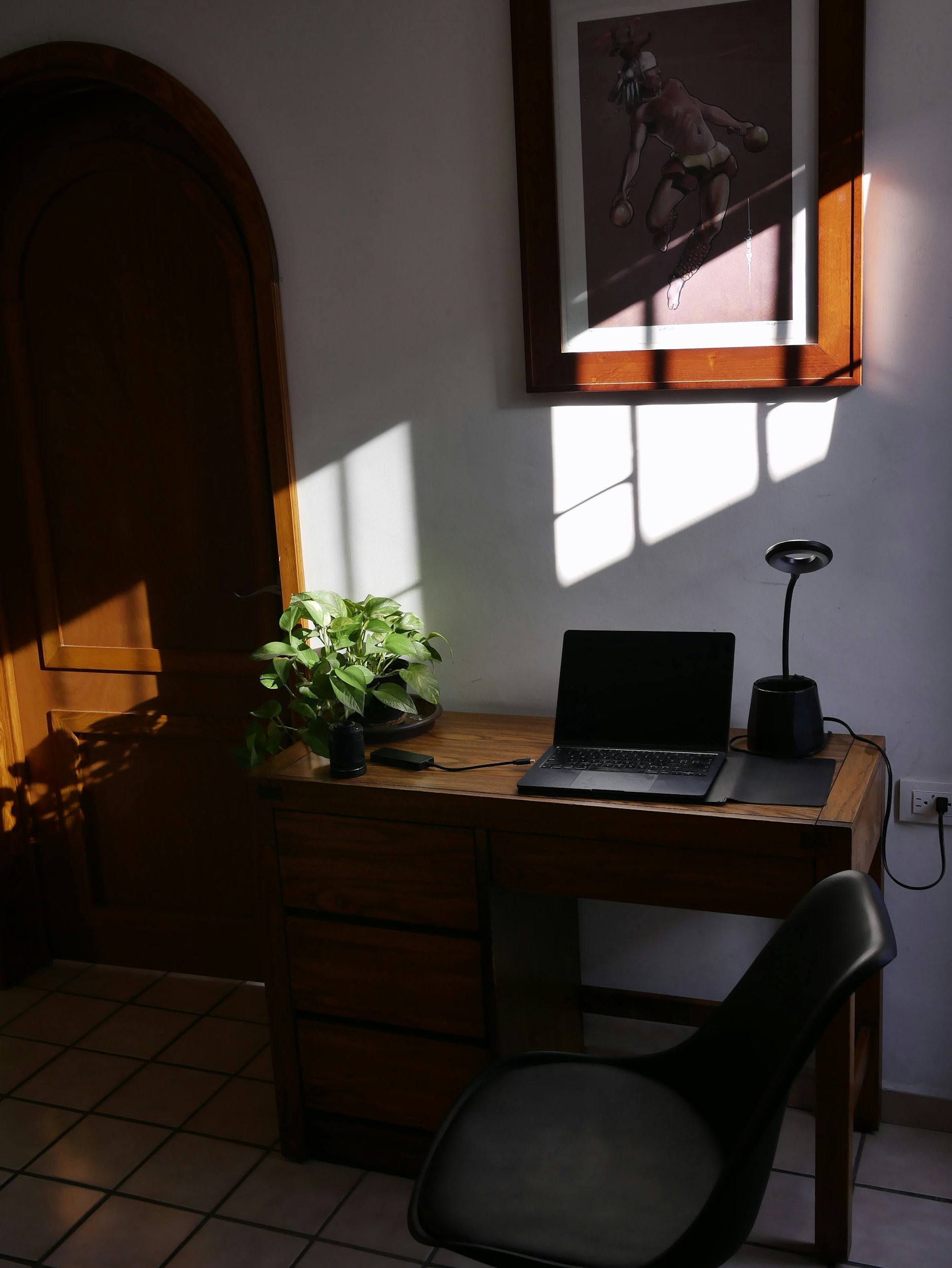
Low maintenance plants and sitting by a window can really make a difference to your brain
What This Means for Your Workspace
So how can you harness these theories to create a workspace that truly supports your wellbeing? Here are some practical ways to bring nature's restorative power into your work-from-home environment:
Start with living plants. Even one or two plants on your desk or nearby shelf can provide that soft fascination your brain needs. Low-maintenance options like pothos, snake plants, or peace lilies are perfect if you're new to plant care.
Position your desk near a window if possible. A view of trees, sky, or even a small garden gives your brain regular opportunities for restoration throughout the day. If a nature view isn't possible, consider a high-quality nature photograph or artwork.
Create a sensory corner. Include natural textures and materials—a bowl of smooth stones or glass marbles, a piece of driftwood, or a small water feature. These provide tactile engagement that can be particularly grounding for neurodivergent individuals who benefit from sensory tools.
Use nature sounds. Playing gentle sounds of rainfall, birdsong, or rustling leaves can provide the calming benefits of nature even in an urban environment or internal room.
Take micro-nature breaks. Step outside for two minutes to look at the sky or touch a plant. These tiny restoration moments add up throughout your day.
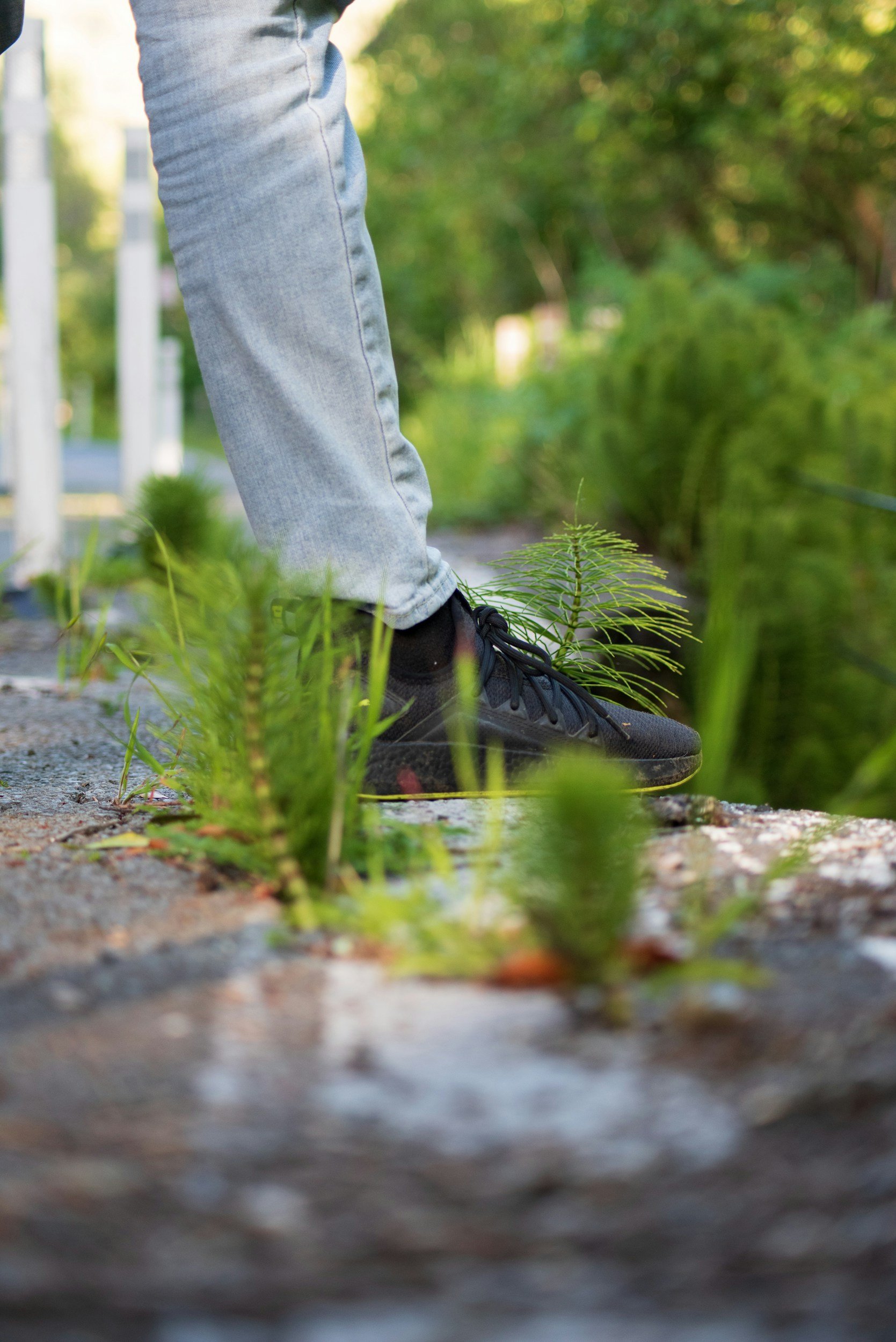
Step outside for a few minutes at regular intervals throughout your day