

The Science Behind: The Power of Biophilic Design
There's a reason why you feel calmer in a room with plants, why natural wood furniture feels more inviting than plastic, and why a view of the garden makes work feel easier. It's called biophilic design, and it's based on a simple but powerful idea: humans have an innate biological need to connect with nature.
The term "biophilia" literally means "love of life," coined by biologist E.O. Wilson to describe our instinctive bond with other living systems. Biophilic design is about intentionally bringing nature's elements, patterns, and principles into our built environments—and the research shows it genuinely impacts our wellbeing, productivity, and mental health.

Our brains are naturally wired to function and respond best in natural environments
Why Nature Matters to Your Brain
We evolved in natural environments, and our brains are still wired to respond to them. When disconnected from nature—spending days in artificial environments under artificial light—we're asking our biology to function in conditions it wasn't designed for. This contributes to stress, fatigue, and reduced cognitive function.
Biophilic design bridges that gap. Studies show that incorporating biophilic elements reduces stress hormones, improves concentration, enhances creativity, and even speeds healing.
Three Ways to Bring Nature Into Your Workspace
Biophilic design works on three levels, and you can incorporate elements from each:
Direct Nature Connection
This is the most straightforward: actual contact with living nature. Plants are the obvious choice—even a single pothos or snake plant on your desk provides ongoing benefits. Position your workspace where you can see trees, sky, or a garden through a window. The view doesn't have to be dramatic; even a small patch of green matters.
Beyond the visual, consider other senses. Open a window to hear birdsong or feel a breeze. Use natural scents like lavender. Watch how natural light changes throughout the day. These multisensory connections are particularly valuable for neurodivergent individuals who benefit from consistent, natural stimuli.
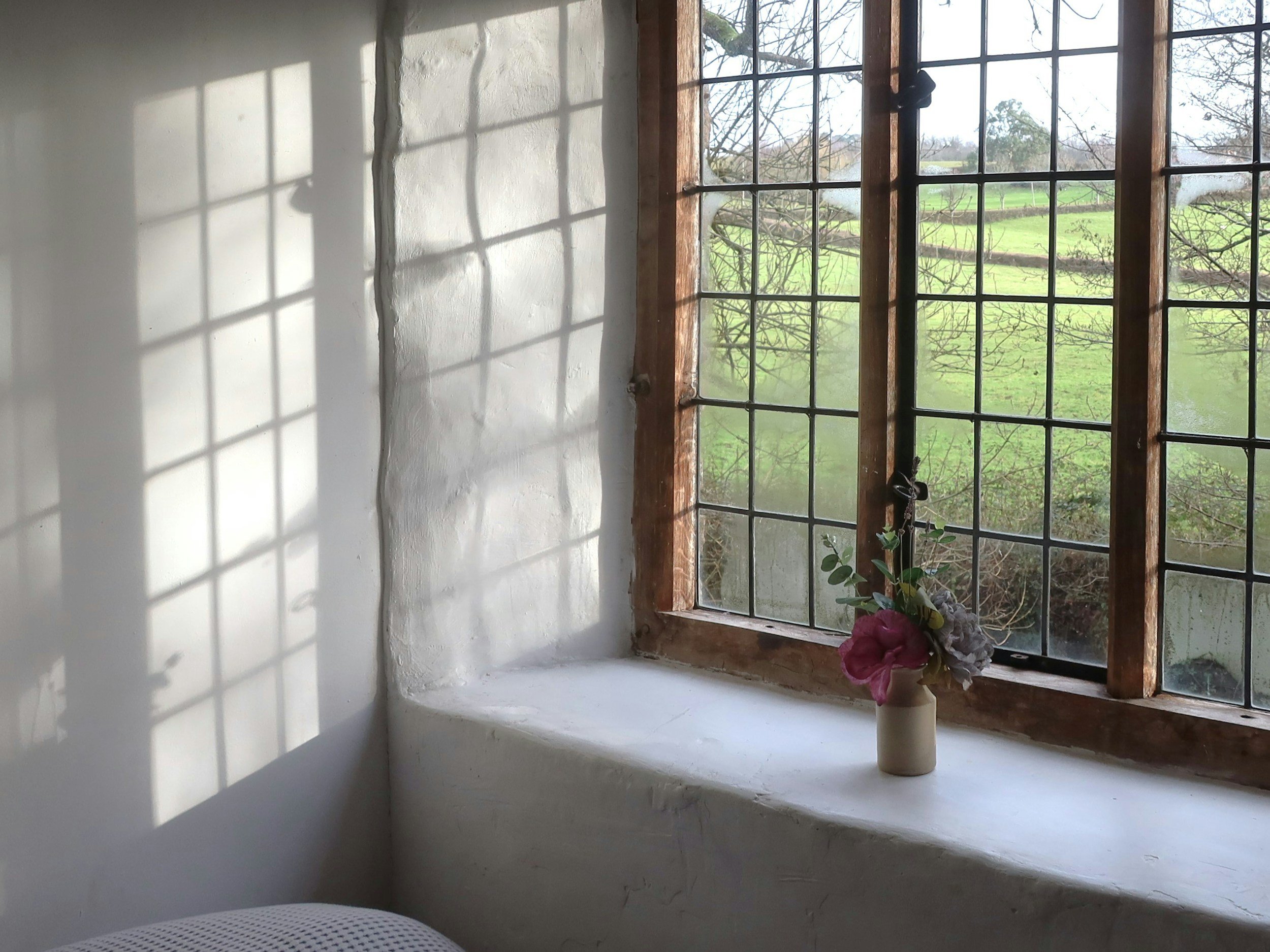
If you cannot access a view of nature, an art print evoking nature will help
Water is another powerful element—a small fountain, aquarium, or even images of water can have calming effects.
Indirect Nature Connection
When direct nature isn't possible, use materials, colors, and shapes that evoke nature. Choose natural materials—wood, stone, wool, cotton, bamboo. These have textures that synthetic alternatives can't replicate.
Look for organic, curved shapes rather than harsh angles. Nature rarely does straight lines—think of the curve of a leaf, the spiral of a shell. Incorporating these forms in furniture or artwork creates a subtle nature connection.
Natural colors matter too. Greens, blues, earth tones, and warm neutrals tend to feel more restorative. This doesn't mean your space needs to be beige—nature is full of color! But natural palettes have a quality our brains recognize and respond to positively.
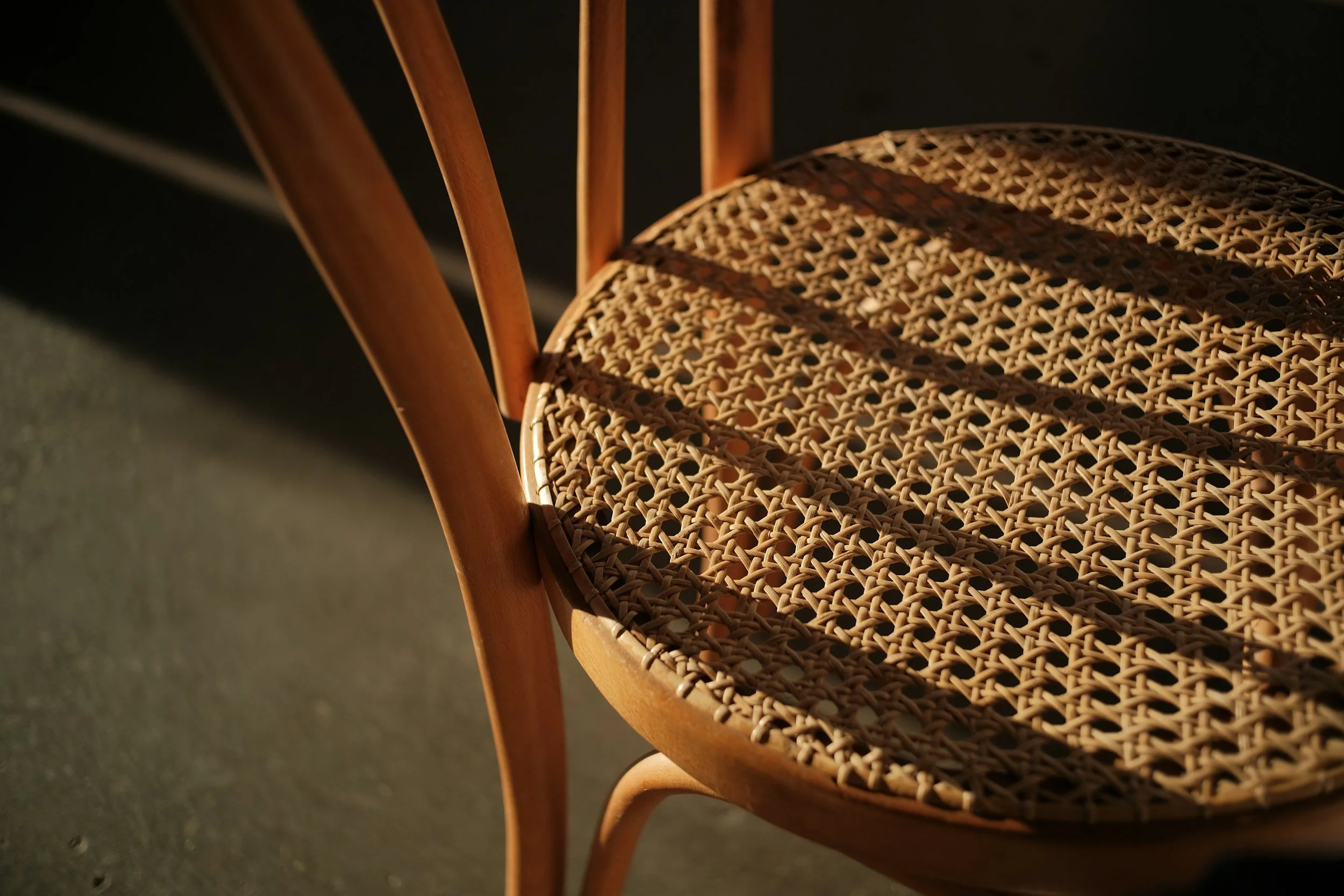
Natural materials will enhance your connection to nature
Nature-Inspired Spatial Design
The way we experience space can be nature-inspired. In natural environments, we instinctively seek places where we can see without being seen—a clearing with a view but also shelter at our backs. This concept, called "prospect and refuge," is deeply embedded in our psychology.
In your workspace, position your desk so you can see the room's entrance while having something solid behind or beside you. This satisfies your brain's need for both awareness and protection, reducing background anxiety.
Creating layers and depth—rather than everything being flat and exposed—also mimics natural environments. A plant here, a shelf there, a partition creating semi-privacy make space feel more dynamic and engaging.
Start Small, Build Connection
You don't need to transform your entire workspace overnight. Biophilic design is about gradually building your connection with nature in ways that feel meaningful to you.
Start with one plant. Open your curtains. Choose a wooden desk organiser instead of plastic. Add a nature photograph that resonates with you. Notice how each small change affects how you feel in your space.
For neurodivergent individuals or those with sensory sensitivities, go at your own pace. Some people find a lush, plant-filled space calming, while others might feel overwhelmed. Some love the sound of a water feature; others find it distracting. The beauty of biophilic design is that it's adaptable—you choose the nature connections that support rather than stress you.
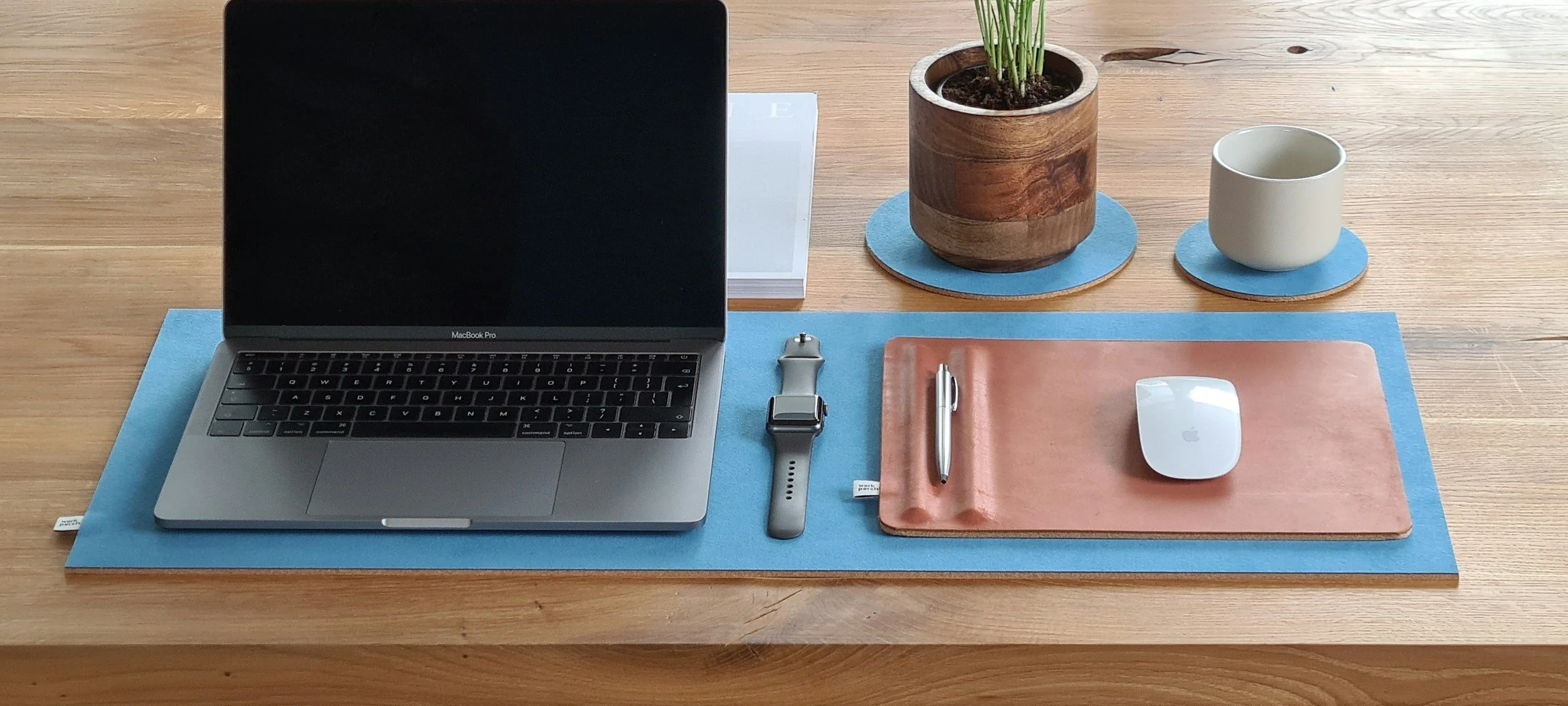
Opt for a wooden desk, natural elements, and give yourself the best environment for a productive work day ahead!