

The Science Behind: How Your Brain Experiences Space
Ever walked into a room and immediately felt either energised or drained? That's not coincidence—it's neuroscience. Your brain is constantly processing spatial information, and the way your workspace is designed directly impacts your cognitive function, mood, creativity, and even your stress levels. Welcome to the fascinating world of environmental psychology and neuroarchitecture.
Your Brain on Space
Environmental psychology studies how our surroundings affect our behaviour, emotions, and mental processes. When we combine this with neuroscience—the study of how our brains actually function—we get neuro-architecture or neuro-design: the practice of designing spaces based on how our brains respond to different environmental elements.
The exciting part? These responses are measurable. Using brain imaging technology, researchers can see which areas of your brain activate when you encounter different spatial features. This isn't subjective preference—it's biology. Let's explore how key spatial elements affect your brain and what this means for your workspace.

Morning light is essential to make you alert and focus.
Light: Your Brain's Primary Timekeeper
Natural light directly influences your suprachiasmatic nucleus (SCN)—your brain's master clock—which regulates your circadian rhythm, the internal 24-hour cycle controlling everything from alertness to hormone production.
Morning exposure to bright, blue-rich light suppresses melatonin and increases cortisol and serotonin, making you alert and focused. As daylight dims, this reverses, preparing your brain for rest. Poor natural light or harsh artificial lighting confuses this biological system.
Practical application: Position your workspace near windows for morning and midday light. If natural light is limited, use daylight-spectrum bulbs (5000-6500K) for morning work, switching to warmer tones (2700-3000K) in the afternoon. Avoid overhead fluorescent lighting—it lacks spectral richness and can increase eye strain.
Colour: More Than Aesthetic
Your brain processes colour in the visual cortex, but colour perception also triggers responses in areas associated with emotion and memory. Different wavelengths have measurably different effects on cognitive function.
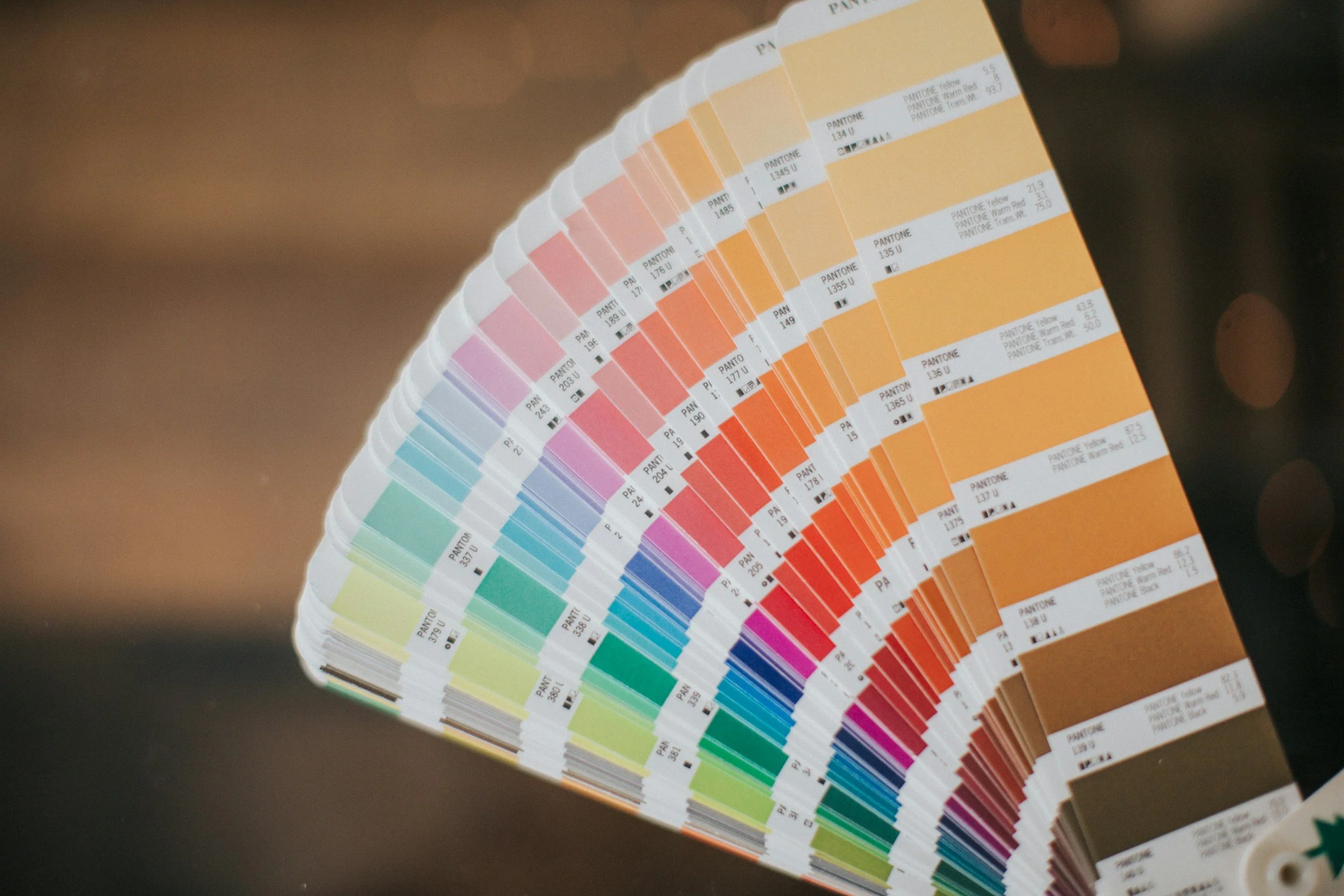
Use colour not just as a way to decorate your workspace, but also to support you in the tasks you are trying to achieve
Blue wavelengths enhance focus and cognitive performance. Green reduces eye strain and promotes calm. Warm colours like yellow can stimulate creativity but may increase anxiety if too intense. Red increases physiological arousal—heart rate, blood pressure—which can be motivating but potentially stressful.
Practical application: Use colour strategically. Blue or green-based palettes work well for focused analytical tasks. Warmer colours support creative work. For neurodivergent individuals who may experience sensory sensitivities, muted or monochromatic schemes reduce cognitive load.
Ceiling Height: Thinking Big or Thinking Details
Ceiling height actually affects how your brain processes information. Higher ceilings activate concepts related to freedom and creativity, promoting abstract thinking. Lower ceilings encourage detail-oriented, focused thinking.
Your brain interprets spatial volume as either expansive (triggering exploration) or contained (triggering concentration). Neither is better—they serve different cognitive purposes.
Practical application: If ceiling height is fixed, create similar effects with other elements. For creative work, maximize visual openness—remove overhead cabinets. For focused work, create enclosure with a partial canopy (like a shelf above your desk) or position yourself in a more contained area.
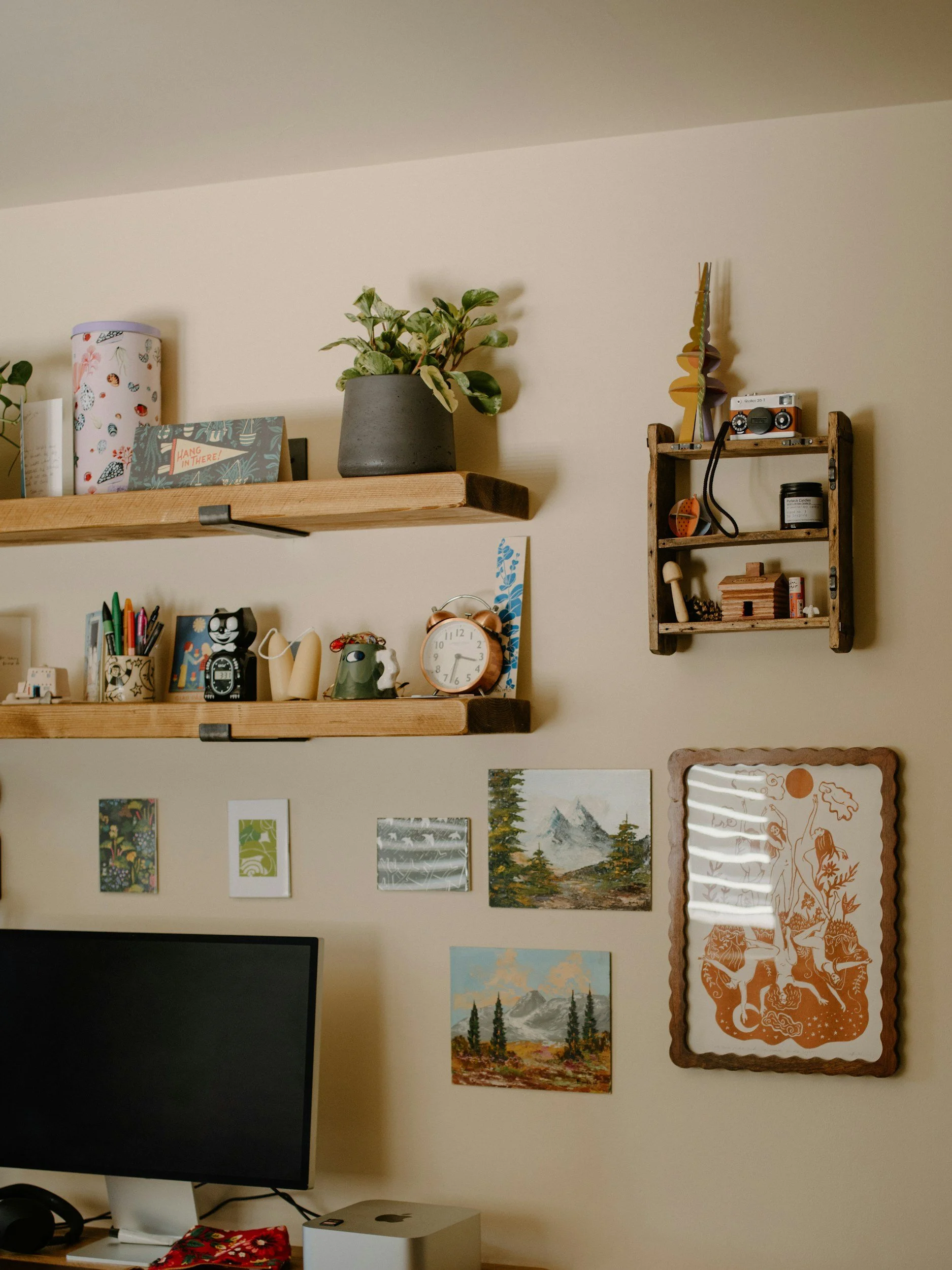
For focused work, create enclosure with a shelf above your desk
Layout and Prospect-Refuge: Your Primal Brain at Work
Your brain's amygdala—the threat-detection center—constantly scans your environment. Layouts providing both "prospect" (clear view) and "refuge" (protected back or sides) reduce background anxiety and free up cognitive resources for actual work.
When your back is to an open space or doorway, your amygdala maintains higher activation, diverting resources from prefrontal cortex functions like planning and decision-making. You might not consciously feel anxious, but your brain is working harder than necessary.
Practical application: Position your desk to see the room's entrance while having something solid behind or beside you. If impossible, a strategically placed mirror helps. This is particularly important for individuals with anxiety or trauma history.
Clutter and Cognitive Load
Visual clutter directly impacts your prefrontal cortex—the brain region responsible for focus, decision-making, and working memory. Multiple visual stimuli compete for attention, increasing cognitive load and reducing your ability to process information efficiently.

You may ignore it but your brain doesn’t!