

Spring Cleaning Meets Sustainability: A Mindful Approach to Your Home Office Refresh

Spring has a way of making us want to throw open the windows and breathe new life into our spaces. If you work from home, your workspace deserves that same fresh start. But here's the thing: decluttering doesn't have to mean binning everything in sight. When we approach our spring refresh mindfully and sustainably, we create spaces that truly support our wellbeing while respecting the planet.
Why Spring is Perfect for Workspace Reassessment
There's a reason spring cleaning is such a time-honoured tradition. As the days lengthen and light floods back into our homes, we naturally see our spaces differently. That corner you've been ignoring all winter? Suddenly visible. The pile of papers that seemed manageable in dim January light? Now demanding attention.
Spring gives us energy and clarity, making it the ideal time to reassess what's working in your workspace and what's simply taking up valuable real estate. Your home office should evolve with you, and a seasonal check-in helps ensure it's still serving your needs.
The Mindful Decluttering Process
Forget the frantic weekend purge. Mindful decluttering is about creating a workspace that genuinely supports how your brain works, not about achieving some Instagram-worthy minimalist aesthetic.
Start by asking yourself: Does this item serve my work, support my wellbeing, or bring me genuine joy? If something fails all three tests, it's probably time to let it go.
Work through your space zone by zone. Your desk surface one day, your shelving the next, your filing system when you have the mental energy. This prevents overwhelm and gives you time to make thoughtful decisions rather than hasty ones you'll regret.
The Sensory Impact of Clutter
Here's something worth considering: clutter isn't just visual noise. For many people, especially those who are neurodivergent, a cluttered workspace creates genuine cognitive overload.
Every item in your visual field is something your brain has to process, even subconsciously. Piles of papers, tangled cables, random objects that have migrated onto your desk—they all compete for your attention and drain your mental energy before you've even started your actual work.
When you clear the excess, you're not just tidying up. You're reducing sensory input, lowering stress, and creating the mental breathing room you need to focus on what matters. Many people find that decluttering their workspace genuinely improves their concentration and reduces end-of-day fatigue.
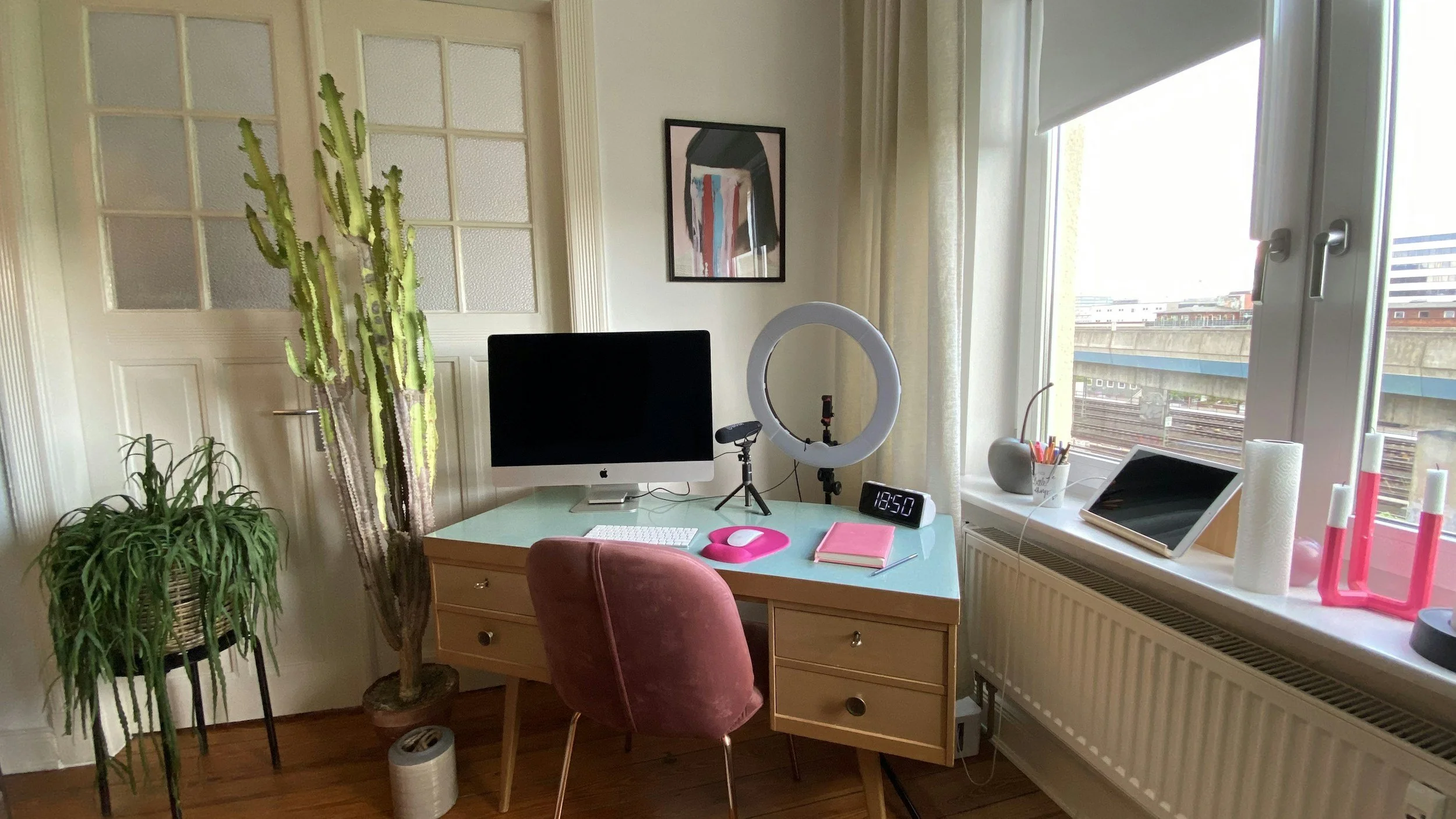
Tidy space, tidy mind!
Sustainable Disposal: Where Things Go Matters
Right, you've sorted through everything. Now what? This is where sustainability meets decluttering.
Donate with purpose. Charity shops welcome good-quality office supplies, books, and desk accessories. Clean, functional items find new homes rather than landfills.
Sell or gift. Facebook Marketplace, Gumtree, and local community groups are perfect for office furniture and equipment. One person's unwanted filing cabinet is another person's perfect solution.
Recycle responsibly. Old cables, defunct electronics, and broken items need proper recycling. Check your local council's recycling centre for e-waste and specialist recycling services.
Upcycle creatively. Before discarding something, ask: could this be repurposed? Old jars become pen holders, fabric scraps can line drawers, sturdy boxes transform into elegant storage with a coat of paint.
The key is to avoid the bin whenever possible. Most items have life left in them, even if not in your workspace.

Upcycle creatively!
Organisational Systems That Work With Your Brain
Once you've decluttered, it's time to create systems that actually stick. The secret? Work with your natural tendencies, not against them.
If you're someone who forgets things when they're out of sight, open storage might work better than closed cupboards. Use clear containers or open shelving where you can see what you have.
If visual clutter overwhelms you, invest in attractive closed storage solutions. Everything has a home, and that home has a door.
For paper-based work, consider whether you're naturally a filer or a piler. If you pile, create designated zones for different types of piles with clear labels. If you file, make your filing system simple enough that you'll actually use it.
The best organisational system is the one you'll maintain. Don't fight your nature—design around it.
Creating Breathing Room
After decluttering, resist the urge to immediately fill the space you've created. That empty surface, that clear shelf—they're not problems to solve. They're breathing room.
Negative space in your workspace serves a purpose. It gives your eyes somewhere to rest, provides landing zones for current projects, and creates a sense of calm that supports your wellbeing throughout the working day.
Think of clear surfaces as functional tools, not wasted space. You've earned that breathing room. Protect it.

Don’t forget to pause at regular intervals throughout your day to move, stretch, give your brain time to reset.