

The Scent of Focus: How Fragrance Can Transform Your Workday

Scent is the only one of our senses with a direct pathway to the limbic system
Spring has a smell. If you're in Devon right now, you probably already know it — that first hit of warm earth, cut grass, and hedgerow blossom that stops you mid-step. But have you ever thought about what that scent is actually doing to your brain?
Your Nose Has a Direct Line to Your Brain
Scent is the only one of our senses with a direct pathway to the limbic system — the part of the brain that governs emotion, memory, and motivation. Every other sense takes a detour through the thalamus first. Smell bypasses the queue entirely.
This is why a particular fragrance can transport you to a childhood kitchen in an instant, or why walking into a lavender-scented room can ease your shoulders before you've even consciously registered the smell. Your brain is already responding.
For those working from home, this is powerful, practical knowledge.
The Science of Scent and Productivity
Research consistently shows that certain aromas have measurable effects on cognitive performance. Rosemary has been linked to improved memory and alertness — one study found that simply being in a rosemary-scented room improved speed and accuracy on cognitive tests. Peppermint has a similar energising effect, helping to lift focus and reduce mental fatigue.
On the other side, lavender and chamomile slow the nervous system in the most helpful way — reducing cortisol, easing anxiety, and creating the kind of calm that makes deep work possible. Citrus scents, particularly lemon and bergamot, have been shown to lift mood and support creativity.
Brain Insight! Olfactory signals reach the amygdala and hippocampus almost instantly — the same regions involved in emotional regulation and long-term memory. This is why scent is one of the most underused tools in workspace design. Most workspace design focuses entirely on what we see. It's free, accessible, low-effort, and neurologically significant — and yet most home offices are designed as if the nose doesn't exist.
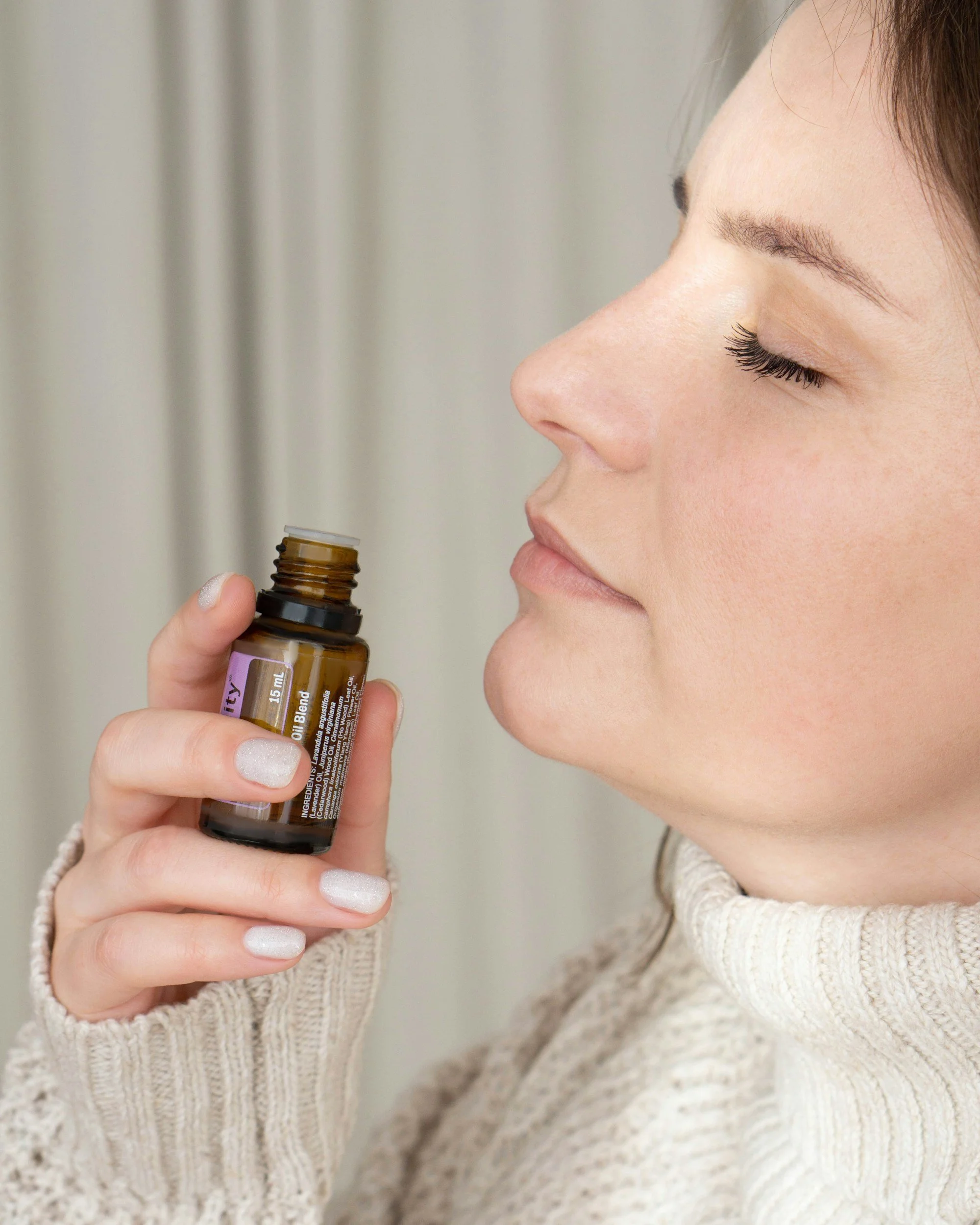
Most workspace design focuses entirely on what we see and completely ignore the power of scent.
Making It Work in Your Home Office
You don't need an expensive diffuser or a collection of luxury candles. Here are some simple, sustainable ways to bring intentional scent into your working day:
1. Match the Scent to the Task
Try rosemary or peppermint when you need to concentrate — a small pot on your windowsill works beautifully and doubles as greenery. Reach for citrus or grapefruit when you need a creative boost or a mid-afternoon lift. Wind down with lavender at the end of the day to signal to your nervous system that work is done.
2. Go Natural Where You Can
Synthetic fragrances can trigger headaches, irritability, and sensory overload — particularly for neurodivergent brains or anyone with sensory sensitivities. Opt for essential oils, soy or beeswax candles, dried botanicals, or simply a few sprigs of fresh rosemary from the garden. It's also kinder to the environment and your indoor air quality.
3. Create a Scent Ritual
Pairing a specific scent with the start of your workday is a form of habit stacking — your brain learns to associate that smell with focus and productivity. Over time, a single breath can become a powerful cue that helps you shift into work mode. Think of it as a gentle, fragrant anchor.
4. A Note on Sensitivity
If you share your home or work alongside others — in person or on calls — it's worth remembering that scent sensitivity is real and common, particularly among autistic individuals or those with migraines or respiratory sensitivities. Keeping fragrance light, personal, and contained (a small roll-on, a nearby plant, a scented cloth near your keyboard rather than a room diffuser) is a thoughtful, inclusive approach.
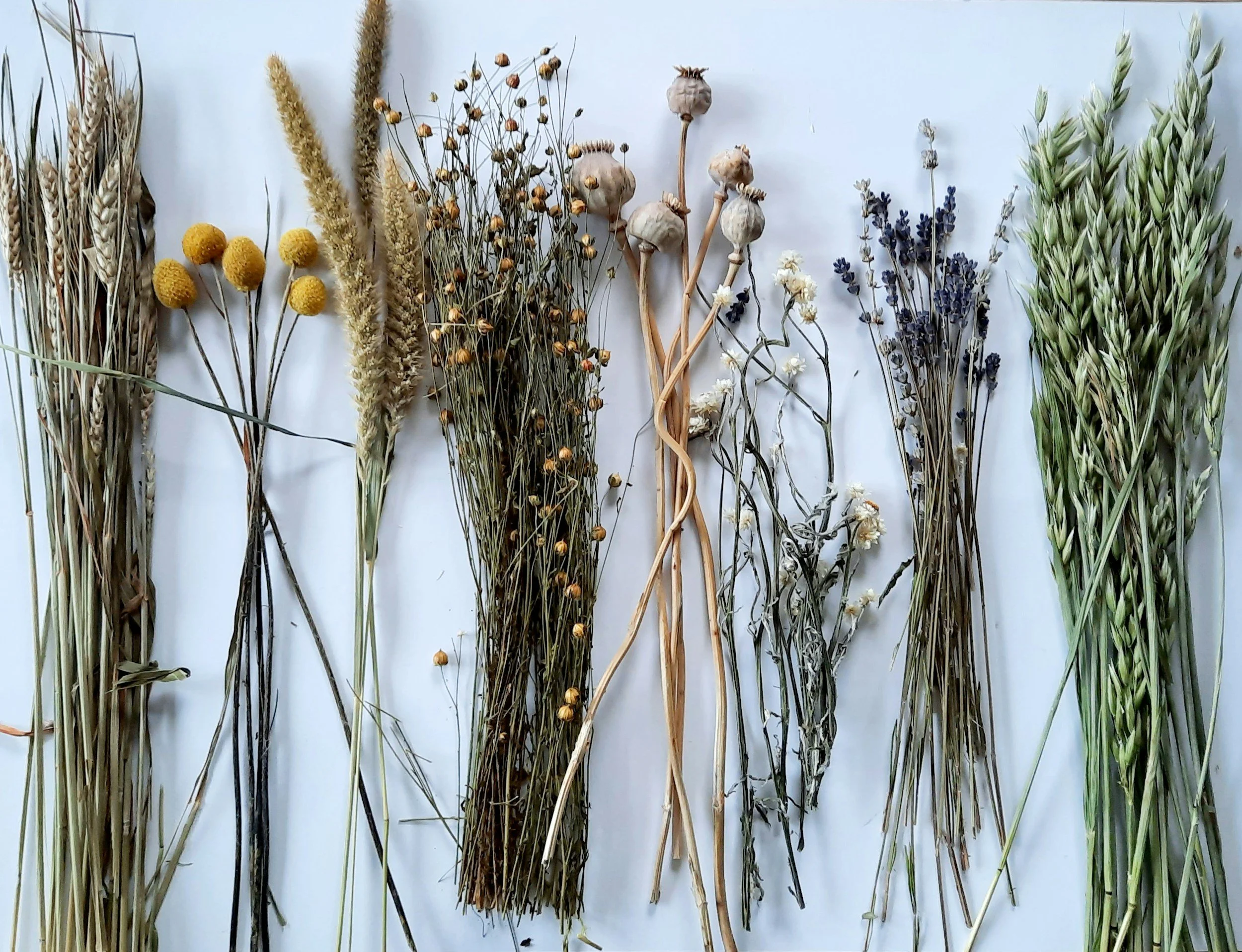
Dried botanicals are kinder to the environment and your indoor air quality.
Devon Spring in a Bottle
If you're lucky enough to be surrounded by Devon countryside right now, you already have some of the finest natural aromatherapy available. Open your window. Pick a sprig of something from the hedgerow. Put a jam jar of bluebells on your desk.
Your brain will thank you — and so will your inbox.
Quick-Start Scent Guide
Focus & alertness: Rosemary, peppermint, eucalyptus
Creativity & mood: Lemon, grapefruit, bergamot, orange
Calm & deep work: Lavender, chamomile, sandalwood
End of day / wind-down: Vetiver, cedarwood, ylang ylang

Think grapefruit for creativity and mood!