

Five Signs Your Home Workspace is Affecting Your Wellbeing

Reflect, Assess, Reset
Your workspace should support you, not drain you. But when you're working from home day in, day out, it's easy to miss the subtle ways your environment might be working against you.
Here are five signs your workspace needs attention—and what they're really telling you.
1. You're constantly tired, even after a full night's sleep
If you're waking up exhausted or flagging by mid-afternoon, your workspace setup could be to blame. Poor lighting—especially harsh overhead lights or insufficient natural light—can disrupt your circadian rhythm and leave you feeling drained. Similarly, a chair that doesn't support your posture properly forces your body to work harder throughout the day, leading to physical fatigue that no amount of coffee can fix.
What to do: Assess your lighting and seating first. Can you position your desk near a window? Is your chair adjustable and supportive?
2. You can't focus, no matter how hard you try
Brain fog and constant distraction aren't always about willpower. Cluttered surfaces, visual noise, and poorly organized spaces overload your brain's processing power. If your workspace doubles as your dining table, laundry station, or general dumping ground, your mind struggles to shift into 'work mode.'
What to do: Create clear boundaries. Even a simple desk organizer or designated 'work zone' can help your brain know when it's time to focus.
3. You're experiencing new aches and pains
Neck tension, shoulder pain, wrist discomfort, lower back ache—these aren't just inconveniences. They're your body telling you that something isn't right. Often, it's down to monitor height, keyboard position, or sitting for too long without movement breaks.

Your screen should be at eye level. If you can’t invest in a stand-up desk, that’s OK! Just remember to keep moving!
What to do: Check your ergonomics. Your screen should be at eye level, your feet flat on the floor, and your elbows at roughly 90 degrees when typing. And remember: the best posture is your next posture. Move regularly.
4. You feel anxious or overwhelmed the moment you sit down
If your workspace triggers stress before you've even opened your laptop, pay attention. Sensory overload—too much noise, harsh lighting, uncomfortable temperatures, or chaotic surroundings—can put your nervous system on edge. For those who are neurodivergent or highly sensitive, these factors can be even more pronounced.
What to do: Tune into your senses. What feels off? Can you soften the lighting, reduce noise with headphones, or adjust the temperature? Small sensory shifts can make a big difference.
5. You're struggling to 'switch off' at the end of the day
If work bleeds into evening and you can't seem to mentally clock off, your workspace might lack clear boundaries. When your workspace is your living space, your brain doesn't get the environmental cue that the workday is done.
What to do: Create an end-of-day ritual. Tidy your desk, close your laptop, or physically move to another room. Even symbolic actions—like lighting a candle or changing clothes—can signal to your brain that it's time to rest.
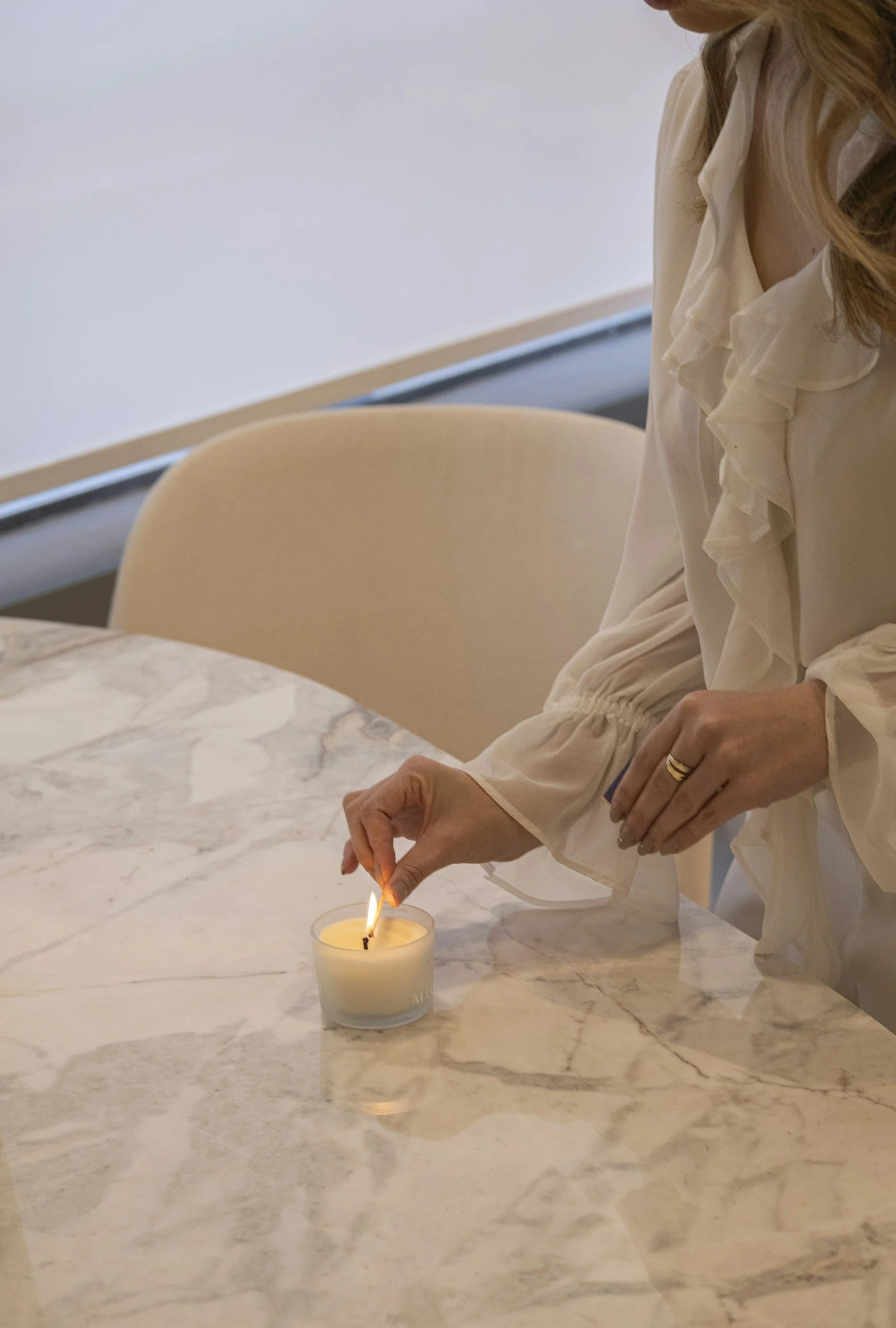
Learn to “close for the day” and light a candle to signal to your brain it is now time to relax.