

10 Ways to transform your Work From Home Life
Working from home sounds like the dream, doesn’t it? No commute, flexibility, autonomy. And yet, if you’re honest with yourself, it doesn’t always feel that way. The boundaries blur. The snacking increases. The motivation dips. The back aches. And somewhere between the kitchen, the laptop, and the never-ending to-do list, your wellbeing quietly slips down the priority list.
I’ve worked with many self-employed people who came to me feeling exhausted, scattered, and stuck — not because they lacked talent or commitment, but because their environment and daily habits simply weren’t set up to support them.

It is not about a lack of talent or committment.
The good news? You don’t need a bigger house, a bigger budget, or a complete life overhaul. You need practical, intentional changes — and you can start implementing them today.
Here are my 10 key pillars for a healthier, happier, more productive work-from-home life.
1. Protect Your Sleep Like It’s Your Most Important Meeting!
Because it is. Sleep is the single most powerful performance tool you have — and it’s free. Yet it’s often the first thing sacrificed when work spills into evenings and screens follow us to bed.
Try this today:
Set a “screens off” alarm 45–60 minutes before your intended sleep time. Use that window for something genuinely restorative — reading, a short walk, stretching, or simply sitting quietly. Keep your bedroom cool, dark, and free from work reminders. If your workspace and sleeping space are the same room, use a physical boundary — a curtain, a screen, or simply closing the laptop lid — to signal mentally that work is done.
2. Fuel Your Brain, Not Just Your Deadlines
When you work from home, the kitchen is dangerously close. It’s easy to reach for quick fixes — biscuits, crisps, endless coffees — especially when energy dips mid-afternoon. But what you eat directly affects how clearly you think, how steadily you focus, and how resilient you feel under pressure.
Try this today:
Prep three simple, nourishing snacks at the start of your week — a handful of nuts, sliced fruit, hummus and veg — and place them at eye level in your fridge. Keep a large glass of water on your desk and refill it each time you make a hot drink. Small, consistent choices compound into real energy.

Add a handfull of berries to this mid-morning snack for a healthy pick me up combining antioxidants, healthy fats, probiotics and prebiotics - your gut’s best friends!
3. Move Your Body Before Your Brain Objects
Movement isn’t a luxury add-on to your working day. It’s essential maintenance. Sitting still for hours on end — often in poor posture, at the wrong height, in inadequate lighting — is one of the biggest contributors to the physical and mental fatigue that home workers experience.
Try this today:
Set a timer for every 45–60 minutes and commit to standing up when it goes off. Stretch your arms overhead, roll your shoulders back, walk to another room. Even 90 seconds of movement resets your circulation and your focus. If you can, take a 10-minute walk outside before you start work — it is one of the most effective ways to signal to your brain that the day has begun.
4. Build Boundaries That Actually Hold
Without the physical separation of an office, work has a way of seeping into everything — evenings, weekends, meals, rest. For the self-employed especially, there’s always one more email, one more task, one more thing that “won’t take long.” Over time, this erosion of boundaries is one of the leading causes of burnout.
Try this today:
Decide on your working hours and write them down as if they are appointments with a client. Communicate them to the people you live with. When your end time arrives, do something physical to mark the transition — change your clothes, step outside, make a different kind of drink. Your nervous system needs a cue that work mode is over.
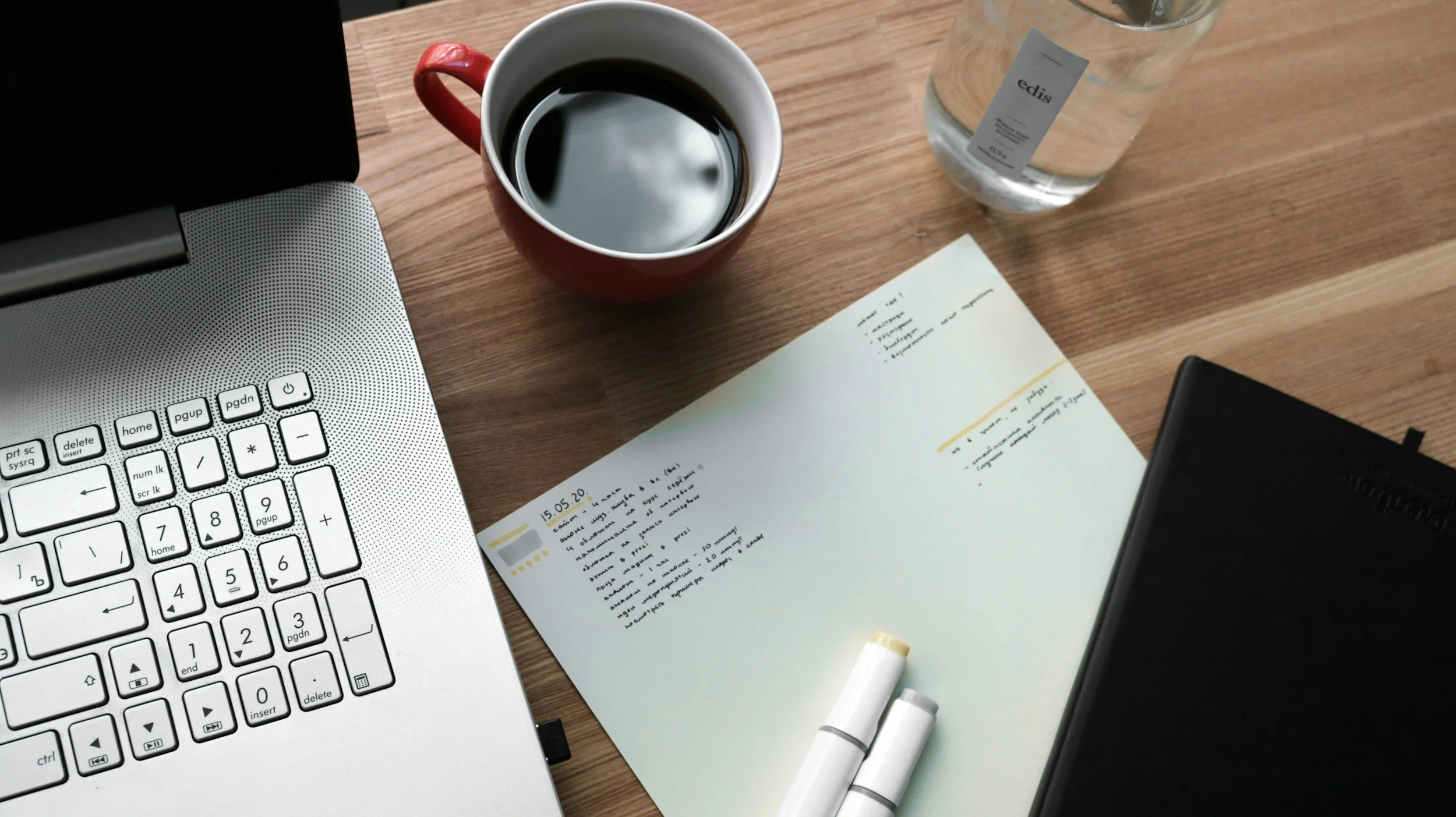
“If you fail to plan, you are planning to fail” (Benjamin Franklin)
5. Start Each Day With a Plan, Not a Panic
Opening your laptop and diving straight into emails is one of the most common — and most costly — habits of home workers. You immediately hand over control of your attention to other people’s agendas, and your own priorities get buried.
Try this today:
Spend the first 10 minutes of your working day (before opening email or social media) writing down your three most important tasks for the day. Just three. Not a list of twenty — three. These are your non-negotiables. Everything else is a bonus. This one small habit creates remarkable clarity and a genuine sense of achievement at the end of each day.
6. Check In With Yourself — Before the Day Checks Out
When you work alone, there’s no colleague noticing that you seem stressed or a manager asking if you’re alright. You are your own support system. This makes self-awareness not a soft skill, but a survival skill.
Try this today:
Build a 2-minute self-check into your daily routine — mid-morning works well. Simply pause and ask yourself: How is my energy right now? How is my mood? What does my body need? You don’t need to journal extensively — a simple awareness is enough to help you respond to what you actually need, rather than pushing through until you crash.

Isolation can creep up quickly when working from home. Make sure you call a friend or coworker for a virtual coffee break at least once a week!
7. Make Time for Real Human Connection
Isolation is one of the most underestimated challenges of working from home, particularly for the self-employed. Without even realising it, you can go an entire day — or several days — without a single meaningful human interaction. Over time, this takes a quiet but significant toll on your mood, motivation, and mental health.
Try this today:
Schedule at least one intentional social interaction into your week — a virtual coffee with a fellow freelancer, a local co-working morning, a phone call with a friend or peer. Put it in the diary like any other appointment. Also consider whether there’s a community, online group, or local network relevant to your work — connection with people who understand your world is particularly nourishing.
8. Ask Honestly: Is Your Workspace Doing Its Job?
Your workspace has a profound effect on how you feel and how you work — and yet most home workers never assess it consciously. They simply adapt to whatever corner, table, or spare room they’ve ended up in, absorbing the strain without connecting it to their environment.
Try this today:
Sit at your desk and ask yourself:
• Is my screen at eye level, or am I straining my neck downward?
• Is my chair supporting my lower back, or am I slouching?
• Is the lighting adequate, or am I squinting or straining?
• Is there clutter in my eyeline creating low-level visual stress?
• Does this space feel like somewhere I want to work?
You don’t need to spend a fortune. Often, raising your screen on a stack of books, repositioning a lamp, or clearing the surface around you can make an immediate difference.
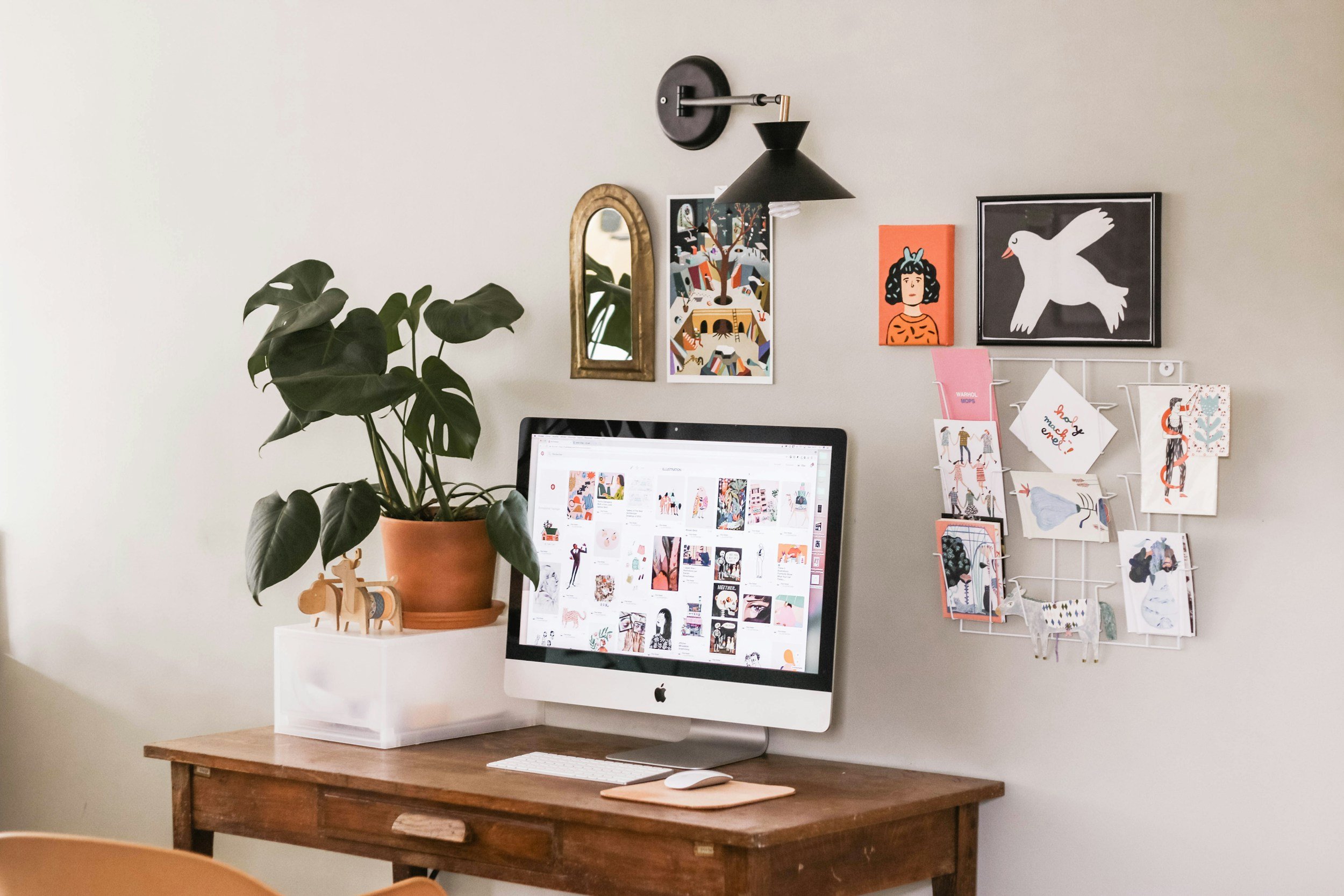
Is your workspace truly supporting your wellbeing?
9. Design Your Time, Don’t Just Manage It
“Time management” sounds dry and corporate, but what it really means is this: are you choosing how your time is spent, or is it happening to you? For self-employed home workers, the answer is often the latter — reactive, fragmented, and exhausting.
Try this today:
Look at tomorrow’s diary and group similar tasks together — all your calls in one block, all your writing in another, admin in a third. This is called “time-blocking” and it dramatically reduces the cognitive drain of constantly switching between different types of tasks. Protect your best hours — the time of day when your energy and focus are naturally highest — for your most demanding work.
10. Create a Workspace That Reflects and Respects You
This final point brings everything together. Your environment is not just a backdrop to your work — it actively shapes your mindset, your energy, and your sense of professional identity. A chaotic, uncomfortable, or uninspiring space quietly communicates to your brain that you are not worth investing in.
Try this today:
Choose one small thing to improve in your workspace this week. It could be adding a plant, a piece of art, or an object that makes you smile. It could be clearing a drawer, adding a lamp, or introducing a colour you love. Small acts of intention in your environment send a powerful message to yourself: this work matters, and so do I.
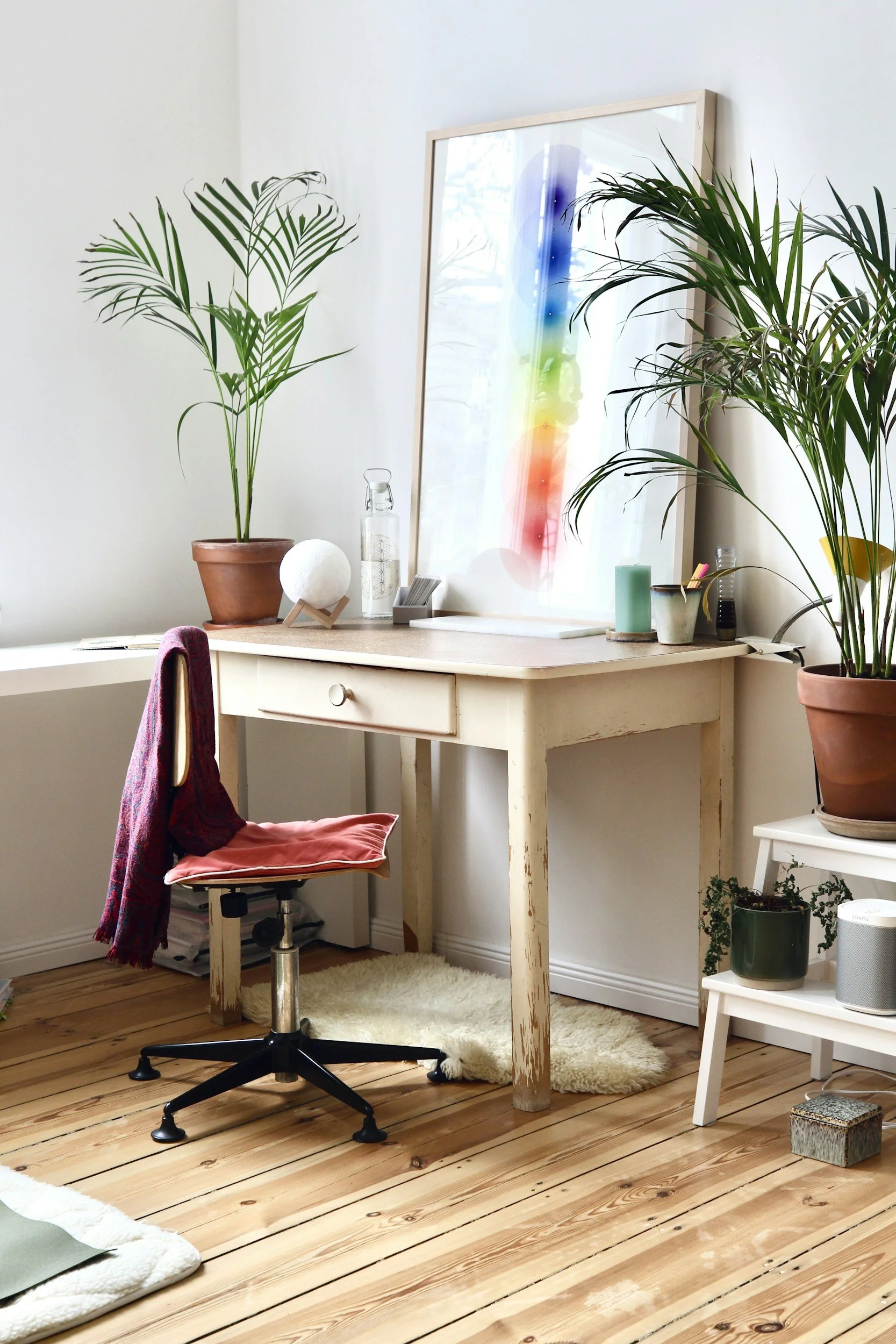
Choose one thing to improve on this week: it could be adding texture with a cushion, colour through a piece of artwork or simply a plant - a spider plant is low-maintenance and highly effective at purifying the air.
Final Thoughts
Improving your work-from-home life isn’t about perfection or dramatic transformation overnight. It’s about consistent, intentional small steps — in how you sleep, eat, move, plan, connect, and inhabit your space — that compound into a genuinely better way of working and living.
You already have everything you need to start. The question is simply where to begin.
If you’d like support assessing your wellbeing and workspace together, I offer a free 30-minute consultation — no pressure, just a conversation. I’d love to hear about where you are and where you’d like to be.
Book your free consultation: thewawstudio.com/contact